Water damage restoration in Surrey is the drying and repair path after a leak inside the building. A burst supply line, a failed water heater, a dishwasher, a washing machine, a toilet overflow, or a roof leak over one room. It is not a flood. If river water, storm water, or sewage filled a level of the house, that is flood restoration. Water damage restoration stops the spread, extracts what you can see, finds the water you can't, and dries the structure in the first day or two, before mold has a chance to start.
Most of these calls are ordinary until they aren't. A braided supply line lets go behind a Newton washer. A water heater in a Guildford utility room dumps onto the subfloor and through the ceiling below. A South Surrey roof leak shows up as a yellow ring in the living room after a November storm. The stain on the paint is usually smaller than the wet area in the cavity. Restoration starts by finding that hidden water, not by painting the ring.
Clean water from a supply line, caught fast, can often be extracted and dried in place. Grey water from a washing machine or a dishwasher is a step dirtier. A toilet overflow that includes sewage is not a drying-only job. The porous materials that soaked it come out. We sort the loss that way on site so you're not paying for a full gut on a fresh supply-line leak, and you're not paying to dry sewage into the wall either.
The practical window is about 24 to 48 hours. After that, drywall paper and carpet backing are far more likely to colonize, and the job slides from water damage restoration into mold remediation. We extract standing water, pull back wet flooring where we have to, set air movers and dehumidifiers, and meter the cavities. Equipment stays until the readings drop, not until the room smells better. A dehumidifier in the middle of the room does nothing for a wet stud bay that was never opened.
Insurance files live or die on the notes. We record where the water came from, what got wet, what was dried, what was removed, and the moisture numbers. Your policy may cover a sudden leak and exclude a slow seep or overland flood. We don't decide that. We give the adjuster a file that matches the building. And if the ceiling, floor, or drywall we're opening is from before the early 1990s, we test for asbestos before the cut. A water loss is a bad time to find out the texture was hot.
What's included
- Source check and shutoff confirmation before drying starts
- Extraction of standing water
- Moisture mapping, including cavities behind finishes
- Removal of materials that are saturated or contaminated
- Air movers and dehumidifiers set to the wet areas
- Monitoring visits until readings are dry
- Photo and moisture documentation for your insurer
- A straight handoff to mold testing if growth is already established
- Asbestos testing before tear-out on pre-1990 finishes
When you need this service
A supply line, fixture, or appliance let go
Washing machines, dishwashers, fridges with water lines, toilets, and water heaters cause a huge share of Surrey water losses. If you caught it the same day and the water was clean, drying is usually the right first move.
A ceiling stain after rain
Roof, skylight, and window leaks wet the insulation and the top of the drywall before you see a mark. We trace the wet path and dry or remove the insulation. Painting the ceiling without opening it traps the water.
Water coming through a light or a floor below
An upstairs bathroom leak that shows up in the kitchen ceiling has already travelled. The upstairs floor and the downstairs cavity both get metered. Drying only the ceiling below leaves the subfloor wet.
You can smell it but the surfaces look dry
A slow leak can wet a wall for weeks. The paint looks fine. The baseboard is swollen, or the room smells sweet and damp. That's still a water damage job, and it's closer to the mold window than a fresh flood of clean water.
How we handle it
- 1
On-site assessment & sampling
We come out, look at the material, and take samples of anything we suspect contains asbestos.
- 2
Accredited lab testing
Samples go to a certified lab. You get a clear answer on what is and isn't asbestos before any removal happens.
- 3
Sealed containment & removal
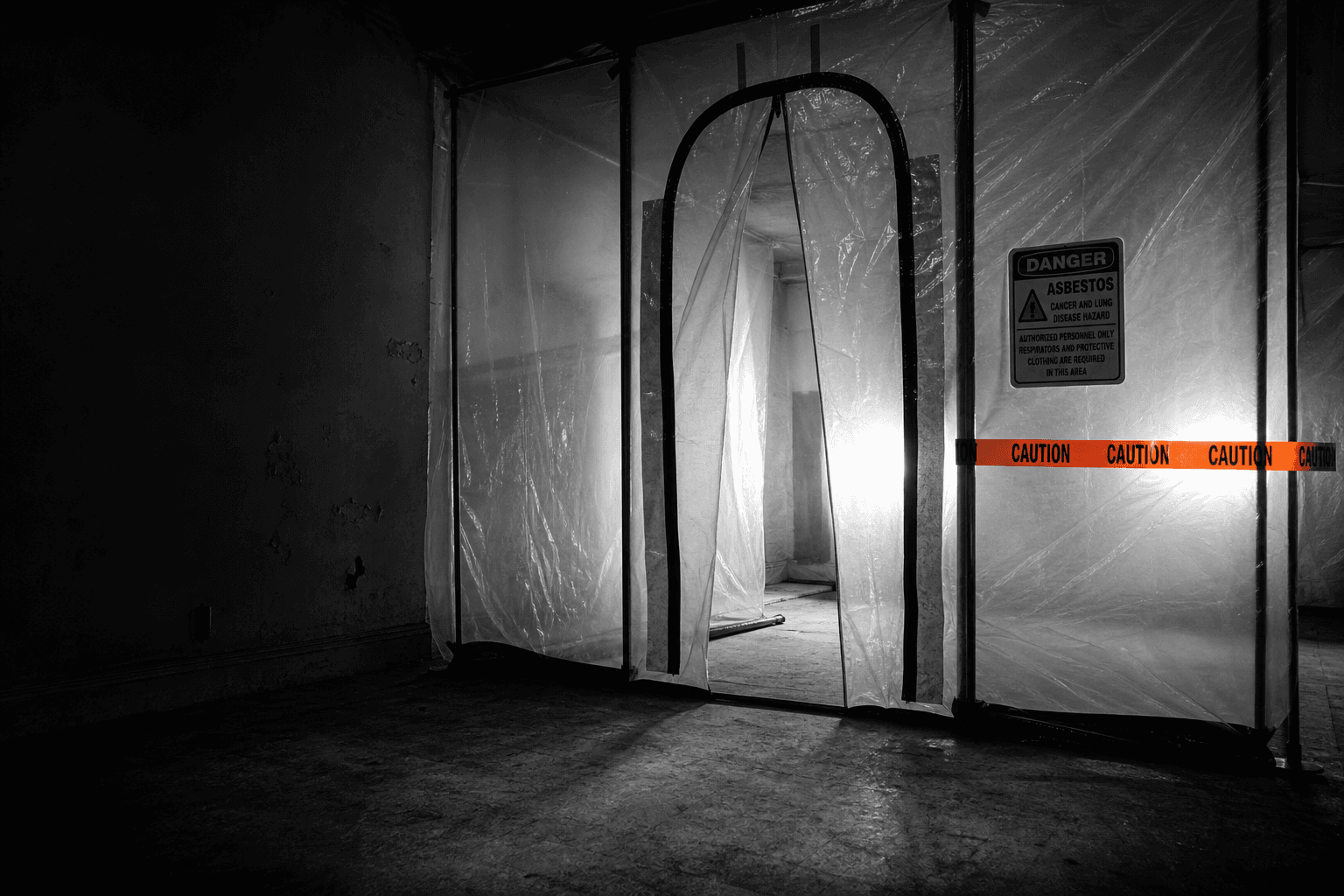
We build proper containment, run HEPA-filtered negative air, and remove the material without spreading fibres.
- 4
Safe disposal
Everything is double-bagged, sealed and hauled to a certified disposal facility with full documentation.
- 5
Clearance testing
Independent air testing confirms the space is clean, and you get written clearance so you can renovate with confidence.
Why choose Surrey Asbestos Pros for water damage restoration
- We separate a clean leak from sewage and from a true flood, and scope it accordingly
- Hidden water in cavities gets metered, not ignored because the paint looks okay
- Drying equipment stays until the numbers say stop
- The file is written so an adjuster can follow the loss
- If mold is already established, we say so and switch to testing and remediation instead of pretending drying will fix it
- Asbestos testing before we open pre-1990 finishes
Where we work
We provide water damage restoration across all of Surrey and the Lower Mainland. See all areas we serve →
Related services
Surrey Asbestos Pros — licensed asbestos testing & removal across Surrey and the Lower Mainland.
FAQ
Water Damage Restoration FAQs
How quickly should water damage be dried?
Start within 24 to 48 hours if you can. That's the window before mold colonies get established on drywall paper and carpet. Clean water from a supply line can often be extracted and dried. Sewage and flood water usually mean the porous materials come out. The longer it sits, the more the job turns from drying into mold remediation.
What causes most water damage calls in Surrey homes?
Supply lines, failed water heaters, dishwashers, washing machines, toilet overflows, and roof or window leaks during heavy rain. In older Surrey houses we also see slow leaks that have been wetting a wall or ceiling cavity for weeks before a stain shows up. The visible spot is usually smaller than the wet area behind it.
Does insurance cover water damage restoration?
Many home policies cover sudden and accidental leaks, and many exclude long-term seepage, poor maintenance, and overland flood. We don't decide the claim. We document where the water came from, what got wet, what was dried or removed, and the moisture readings, so you and your adjuster have a clear file. Call your insurer as soon as the source is stopped.
Get a quote · No obligation
Need water damage restoration in Surrey?
Call now or send us a message to get a quote. We test, contain and remove asbestos across Surrey and the Lower Mainland, the right way.