Asbestos Testing & Inspection in Surrey, BC
Certified Asbestos Testing in Surrey, BC
Asbestos testing in Surrey means taking small, carefully collected samples of suspect building materials and having an accredited laboratory confirm whether they contain asbestos fibres. If your property was built or renovated before 1990, asbestos testing is the safe and legally required first step before any renovation, demolition or repair work that will disturb those materials. WorkSafeBC's OHS Regulation makes this mandatory on any job site, and it protects both your family and anyone working on your property. We identify the materials to test, sample them without releasing fibres, send results to a certified lab, and give you a written report you can actually use — for permits, contractors and peace of mind.
Surrey grew fast through the 1960s, 70s and 80s, and a huge share of the city's housing was built during the exact window when asbestos was a cheap, legal and widely used ingredient in building products. Newton, Fleetwood, Guildford, Whalley, Cloverdale — if you own a home or building in any of these neighbourhoods that predates 1990, there's a reasonable probability that asbestos is present in the ceilings, flooring, walls, attic or pipe insulation. Asbestos testing in Surrey isn't an edge case. It's one of the most common first steps in any older-home renovation.
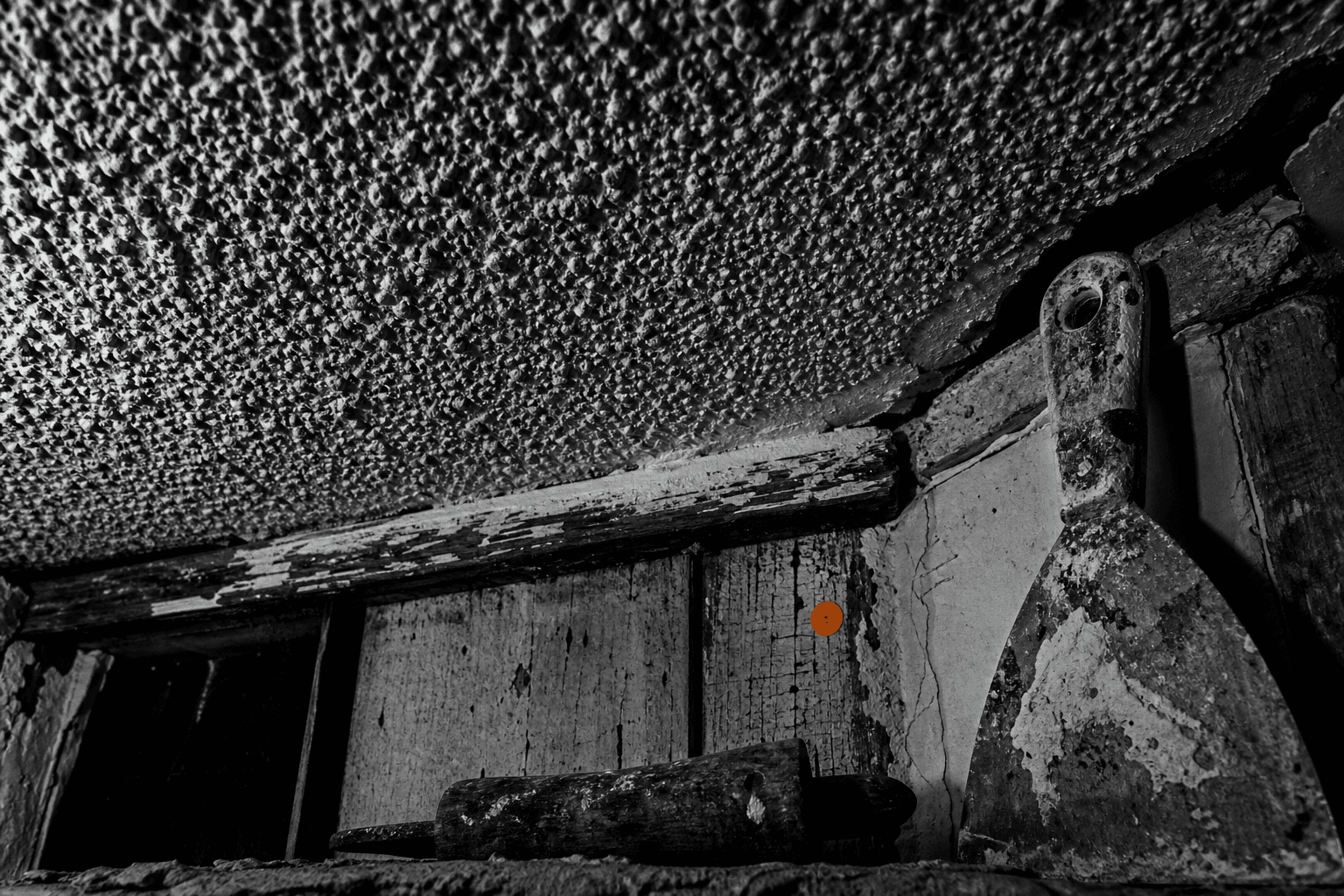
The critical thing most homeowners don't realise is that you cannot identify asbestos-containing materials by sight. A smooth, painted ceiling, a sheet of beige vinyl lino, a wall of apparently ordinary drywall — any of these can contain asbestos fibres. The material looks identical to its non-asbestos equivalent. The only way to know with certainty is certified asbestos testing by an accredited analytical laboratory. Any decision made without a test is a guess, and with asbestos, guesses carry real health consequences.
Our asbestos inspection and sampling process is thorough, fast and minimally disruptive. We arrive at your Surrey property, conduct a visual assessment of all the materials within the scope of your planned work, and identify everything that should be sampled — textured ceilings, vinyl flooring and black mastic adhesive, drywall joint compound, vermiculite attic insulation, pipe and duct wrap, exterior siding and any other suspect materials. Samples are taken using wet suppression techniques that prevent fibre release during the sampling process itself. Each material type is sampled and labelled separately so you get an individual result for each one.
Those samples go to an accredited laboratory where they're examined under polarized light microscopy (PLM) — the gold-standard method for identifying asbestos fibre type and concentration. Standard turnaround is three to five business days, with rush processing available for time-sensitive projects. The written report we deliver identifies each sampled material, whether asbestos was detected, the fibre type (chrysotile, tremolite, amosite, etc.) and the percentage present. Non-detect materials can proceed to demolition or renovation without asbestos precautions. Positive materials get a recommended course of action.
Testing first isn't just about following the rules — it's the decision that saves money. Every week in Surrey, renovation projects are halted mid-job because asbestos turns up after demolition has already started. Stopping work, calling in an abatement crew, completing emergency containment and restarting the project costs far more — in time, trade delays and remediation — than a test done at the planning stage. Book the test before your contractor books the demo, and you'll have a clear picture before the first dollar is committed.
What's included
- On-site visual assessment of all suspect materials
- Safe wet-method sampling that doesn't disturb surrounding areas
- Accredited laboratory analysis (PLM method)
- Individual written results for each material sampled
- Plain-language summary of what results mean for your project
- Guidance on next steps for any positive materials
- Pre-renovation hazardous materials surveys
- Pre-demolition surveys for Surrey permit applications
- Documentation suitable for contractors, permit offices and lawyers
When you need this service
Before any renovation in a pre-1990 home
WorkSafeBC's OHS Regulation Part 6.1 requires a hazardous materials assessment before work that disturbs any structure built before 1990. If you're opening walls, removing ceilings, pulling flooring, or altering pipes in an older Surrey home, asbestos testing comes first — full stop.
Before applying for a demolition permit
The City of Surrey requires a hazardous materials survey before issuing most demolition permits. Getting this done early prevents delays at the permit stage and ensures your abatement contractor has the documentation they need before they mobilise.
After purchasing an older property
If you've just bought a 1970s or 80s home in Newton, Guildford, Cloverdale or anywhere else in Surrey and you're planning updates, testing gives you a clear, documented picture of what you're dealing with before you commit to a renovation budget and timeline.
When you've discovered suspect materials
Crumbling pipe wrap in the basement, grey-brown pebbly insulation in the attic, old vinyl tile that's lifting — if anything in your home looks like it could be from the asbestos era, don't touch it until it's been tested. A sample costs far less than emergency remediation.
For a property sale or due diligence
Buyers, lenders and home inspectors increasingly flag older properties for asbestos. A documented test result — especially a clean one — removes a major sticking point from negotiations and protects you from post-sale liability.
How we handle it
- 1
On-site assessment & sampling
We come out, look at the material, and take samples of anything we suspect contains asbestos.
- 2
Accredited lab testing
Samples go to a certified lab. You get a clear answer on what is and isn't asbestos before any removal happens.
- 3
Sealed containment & removal
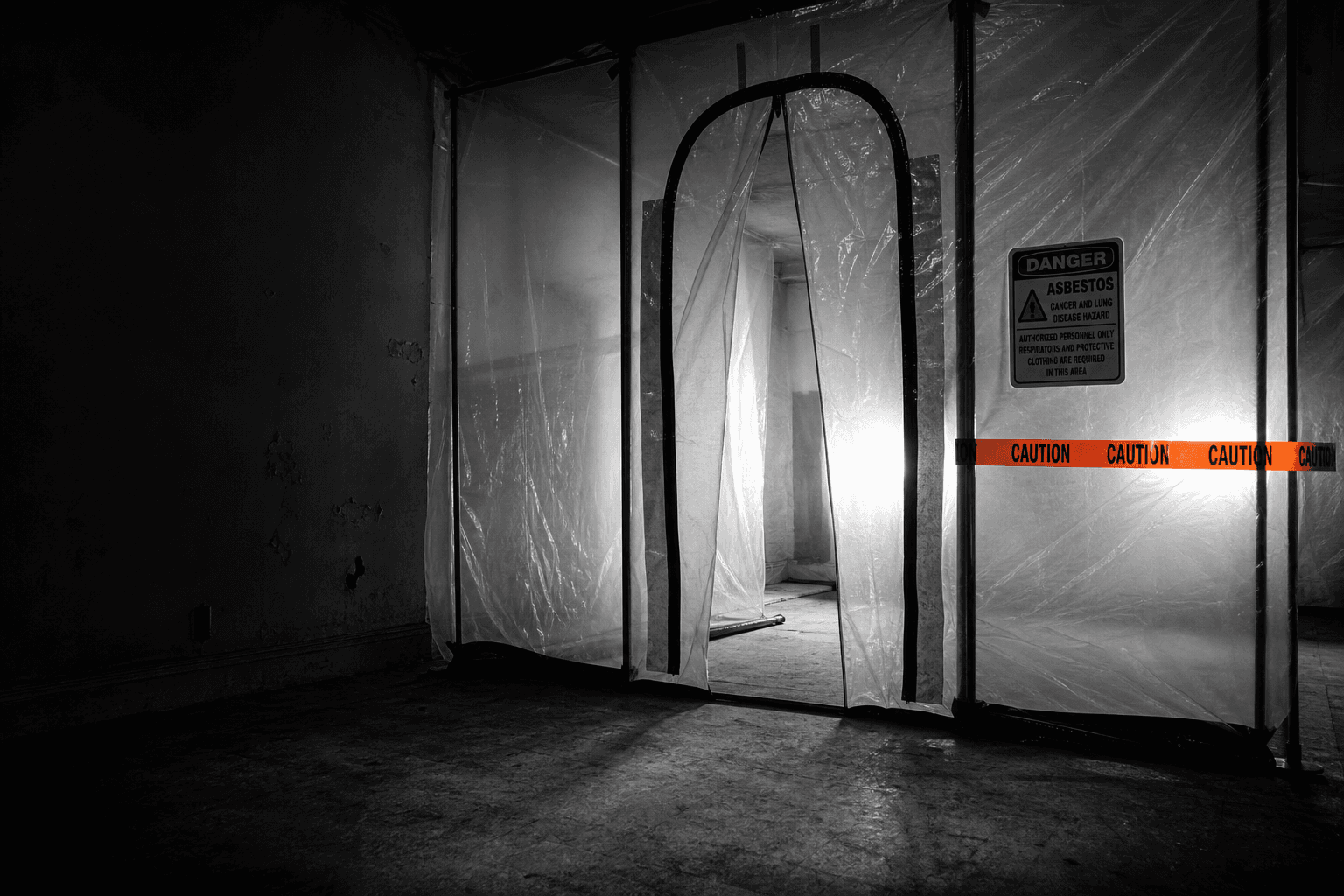
We build proper containment, run HEPA-filtered negative air, and remove the material without spreading fibres.
- 4
Safe disposal
Everything is double-bagged, sealed and hauled to a certified disposal facility with full documentation.
- 5
Clearance testing
Independent air testing confirms the space is clean, and you get written clearance so you can renovate with confidence.
Why choose Surrey Asbestos Pros for asbestos testing & inspection
- Accredited lab results, not visual guesses
- Wet-method sampling that doesn't create a hazard
- Clear written reports accepted by Surrey permit offices
- Full pre-demolition hazardous materials surveys available
- Local crews who know Surrey's housing stock and common problem spots
- Honest advice — we won't recommend removal you don't need
Where we work
We provide asbestos testing & inspection across all of Surrey and the Lower Mainland. A lot of our work is in Newton, Guildford, Cloverdale, New Westminster, Burnaby, Coquitlam and Port Coquitlam, where older homes are common. See all areas we serve →
Related services
Surrey Asbestos Pros — licensed asbestos testing & removal across Surrey and the Lower Mainland.
FAQ
Asbestos Testing & Inspection FAQs
How do I know if my home has asbestos?
You can't tell by looking. Asbestos hides in popcorn ceilings, vinyl flooring, drywall mud, insulation and pipe wrap. The only way to know for sure is a lab test. We take samples safely and send them to a certified lab for you.
How do I test for asbestos?
There are two routes. The first is hiring a qualified asbestos inspector to come to your property, identify suspect materials and take samples using proper wet-suppression techniques that don't release fibres during sampling. Those samples go to an accredited laboratory for analysis under polarized light microscopy (PLM), which is the standard method for identifying asbestos fibre type and concentration. You get a written report for each material tested. The second route is a DIY bulk sampling kit, which lets you collect your own samples and mail them to a lab. These kits can work for a basic yes/no answer on a single material, but they have real limitations: collecting a sample yourself without proper technique can release fibres, you may not identify all the suspect materials in your home, and the result isn't the documented professional report that WorkSafeBC and Surrey permit offices require before renovation or demolition work. For any renovation, sale or permit application, professional testing is the right call.
How much does asbestos testing cost in Canada?
The cost of asbestos testing in Canada varies based on a few key factors: the number of materials being sampled, whether the test is a basic residential inspection or a full pre-demolition hazardous materials survey, how quickly you need results, and who's doing the testing. A single-material residential sample with lab analysis costs less than a whole-home survey covering eight or ten different material types. Rush lab processing adds to the turnaround cost but can be worth it when a renovation timeline is tight. Pre-demolition surveys are scoped to the full building and include documentation for permit applications, so they're priced differently from a simple renovation test. The best approach is to call us, describe what you're planning and how many materials you think need testing, and we'll give you a straight quote based on your actual scope rather than a generic number.
Will 30 minutes of asbestos exposure hurt you?
Brief, incidental asbestos exposure at low concentrations is generally considered low risk, but the honest answer is more nuanced than a simple yes or no. Asbestos-related diseases like mesothelioma and asbestosis are primarily associated with repeated, prolonged exposure at high concentrations, the kind experienced by workers in shipbuilding, insulation installation and demolition over years of occupational contact. A single 30-minute episode of low-level exposure is unlikely to cause disease on its own. That said, no exposure threshold has been established below which asbestos fibres are definitively safe, and fibre type matters significantly: amphibole fibres (tremolite, amosite, crocidolite) are more hazardous than chrysotile and remain in lung tissue longer. The key variables are the fibre concentration in the air (walking through a room with intact, undisturbed asbestos is very different from actively sanding it), the fibre type and the individual's own susceptibility. If you were in a space where asbestos-containing material was being actively disturbed without containment, mention it to your doctor so it's on your medical record. If you were simply in an older building that may contain asbestos, the risk from that single exposure is very low. The real protection is preventing future exposure, which means testing and properly removing materials before any renovation work disturbs them.
The Laboratory Science Behind Asbestos Test Results
The analytical method used for bulk asbestos sample testing is Polarized Light Microscopy (PLM), and understanding how it works helps you understand what your results actually mean. When a sample of suspect material arrives at an accredited laboratory, a technician prepares a thin mount of the material and examines it under a microscope fitted with polarizing filters. Asbestos fibres are identified by a combination of characteristics that are unique to each fibre type: their refractive index, birefringence (the way they split polarized light), extinction angle, elongation direction and morphology. These optical properties allow a trained analyst to distinguish chrysotile from the five amphibole asbestos minerals and to differentiate all of them from non-asbestos fibres like fibreglass, mineral wool and cellulose, which can look similar to the untrained eye but behave differently under polarized light.
Asbestos is not a single mineral. It's a commercial term applied to six regulated fibrous silicate minerals that were used in building products: chrysotile (the only serpentine mineral, also called white asbestos), and five amphibole minerals — amosite (brown asbestos), crocidolite (blue asbestos), tremolite, actinolite and anthophyllite. Chrysotile accounts for roughly 95% of asbestos used in Canadian building materials and is the type most commonly found in Surrey homes — in popcorn ceilings, joint compound, floor tile and pipe wrap. The amphibole fibres, while less common in residential building products, are generally considered more hazardous: they have a more rigid crystal structure that resists dissolution in lung tissue and stays in the body longer. Tremolite is the fibre type associated with the Libby, Montana vermiculite contamination. Understanding which fibre type is present informs both the risk assessment and the abatement approach.
The PLM result is reported as a percentage by area — the estimated proportion of the sample that is asbestos fibre. Regulatory thresholds in Canada define a material as asbestos-containing if it contains greater than 0.5% asbestos by area (some standards use 1%). A result below the detection limit is reported as non-detect, which doesn't mean zero fibres are present — it means fibres were not observed at the analytical level used. For most renovation and permit purposes, non-detect is the practical equivalent of a negative result. Results at trace levels (detected but below 0.5%) may still require professional handling depending on the planned work and the fibre type identified. Your written report will include the lab's exact finding and the applicable threshold so there's no ambiguity.
For air monitoring — the kind done to characterise airborne fibre levels during abatement work or for post-removal clearance testing — Phase Contrast Microscopy (PCM) is the standard method. PCM counts all fibres visible in a specific size range and is faster and less expensive than bulk PLM analysis, making it practical for the air monitoring volumes required on active abatement sites. Where a more detailed characterisation is needed — for example, to distinguish asbestos fibres from non-asbestos fibres in a complex air sample — Transmission Electron Microscopy (TEM) provides higher resolution identification and is used for research, litigation support or when clearance criteria require the precision that PCM can't provide. WorkSafeBC's clearance criteria for occupied re-entry are based on PCM fibre counts, making PCM the standard for clearance sampling in BC.
Laboratories conducting regulated asbestos bulk analysis in Canada must hold appropriate accreditation to produce results that are accepted by WorkSafeBC, permit offices and courts. In Canada, the relevant accreditation body for environmental testing laboratories is the Standards Council of Canada (SCC) under the ISO 17025 standard, which covers competence requirements for testing and calibration laboratories. Accredited labs operate under a quality management system that includes documented procedures, proficiency testing, chain-of-custody protocols and regular audits. Chain of custody — the unbroken documentation trail from sample collection through delivery to the lab to analysis and reporting — is what makes a result legally defensible. It's why samples collected and submitted by a qualified inspector produce reports that permit offices and WorkSafeBC accept, and why informal 'grab samples' sent to a lab without proper documentation are less reliable for regulatory purposes.
BC Asbestos Regulations: What the Rules Require and Who They Apply To
The primary regulatory framework governing asbestos work in British Columbia is Part 6.1 of the WorkSafeBC Occupational Health and Safety (OHS) Regulation (BC Reg 296/97). This section of the regulation, titled 'Asbestos,' sets out the requirements for identification, assessment, notification, safe work procedures, worker protection and disposal for any work that involves or may involve asbestos-containing materials. It applies to all workplaces in BC — which, for renovation and demolition purposes, includes any private property where workers are employed to carry out the work. The regulation was significantly updated in 2021, strengthening the survey and assessment requirements and clarifying the owner's obligations alongside those of the employer.
The OHS Regulation classifies asbestos work into three types based on risk level, and the type determines what controls, procedures and notifications are required. Type 1 work is low-risk: minor disturbance of non-friable ACM in good condition, such as small repairs or drilling through intact floor tile. No WorkSafeBC notification is required, but basic personal protective equipment and work procedures apply. Type 2 work is medium-risk: removal of non-friable ACM up to 1 square metre in area or 1 linear metre in length in a single operation. Written procedures, appropriate respiratory protection and certified disposal are required. Type 3 work covers everything else: removal of larger quantities, any friable ACM (material that can be crumbled by hand pressure), and all pre-demolition asbestos abatement. Type 3 requires a written asbestos work plan, trained and equipped workers, sealed containment, HEPA-filtered negative air, personal air monitoring, independent clearance testing and advance notification to WorkSafeBC. Virtually all residential renovation asbestos work involving textured ceilings, floor tile removal across a room, drywall demolition or vermiculite removal is Type 3 work.
OHS Regulation Section 6.4 places a specific obligation on owners of buildings constructed before 1990 to ensure that a hazardous materials assessment is completed before any work that may disturb the structure is carried out. This is the owner's duty, separate from the employer's duty. In plain terms, if you own a pre-1990 property in Surrey and you're hiring any contractor to carry out renovation or demolition work, the law requires you to have the assessment done and the results available before work begins. The contractor also has a duty to review the assessment and ensure workers are not exposed to asbestos without appropriate controls. Both parties share responsibility, but the assessment obligation sits first with the owner. Failing to disclose a known asbestos hazard to workers on your property is a serious breach of the OHS Regulation.
For demolition work specifically, Section 6.6 of the OHS Regulation requires that all asbestos-containing materials be removed from a building before demolition begins to the extent that it is practicable to do so. The City of Surrey's building department requires a hazardous materials survey report as part of the demolition permit application documentation. This survey, which must be conducted by a qualified person and supported by laboratory analysis, identifies every regulated material in the structure and confirms that abatement has been or will be completed before demolition proceeds. The demolition permit will not be issued without this documentation in order. For projects where the survey identifies ACM requiring Type 3 removal, WorkSafeBC must be notified in writing at least 24 hours before work begins (for smaller scopes) or further in advance for large projects.
WorkSafeBC's enforcement approach to asbestos violations is active. Prevention officers conduct inspections on renovation and demolition sites, and stop-work orders are issued for worksites where asbestos is being disturbed without required controls. Penalties under the Workers Compensation Act for OHS Regulation violations can reach tens of thousands of dollars for employers, with potential personal liability for owners who knowingly failed to disclose hazardous materials. Beyond regulatory penalties, the civil liability exposure for a property owner who fails to disclose asbestos to workers or a buyer — and where subsequent asbestos exposure is documented — is substantial. The regulatory framework in BC is not designed to be punitive for homeowners acting in good faith; it's designed to ensure that workers and building occupants aren't exposed to a known carcinogen without their knowledge. An asbestos test before any renovation is the first step in meeting every obligation the regulation sets out.
Get a quote · No obligation
Need asbestos testing & inspection in Surrey?
Call now or send us a message to get a quote. We test, contain and remove asbestos across Surrey and the Lower Mainland, the right way.