BC's asbestos rules are detailed and often misunderstood. Homeowners assume they only apply to commercial jobsites. Contractors sometimes assume the homeowner is responsible for sorting it out. The reality is that the rules apply broadly, and the cost of getting it wrong — in fines, liability and potential health harm — is serious. Here's what you actually need to know.
The core legal requirement
WorkSafeBC's Occupational Health and Safety (OHS) Regulation, Part 6.1, requires that a hazardous materials assessment be completed before any work that will disturb the structure of a building constructed before 1990. This applies to renovations, demolitions and repairs. The assessment must identify all asbestos-containing materials in the area of work, and the results must be available on site.
It doesn't matter if it's a one-room bathroom reno or a full teardown. If the building is pre-1990 and someone is being paid to do the work, the assessment is mandatory. Even for owner-builders doing their own work, the assessment is strongly recommended and effectively required if you want a building permit from the City of Surrey.
Type 1, Type 2 and Type 3 asbestos work
BC's regulations classify asbestos work into three categories based on risk level:
- Type 1 (low risk): Minor repairs or cleaning of non-friable asbestos materials, limited disturbance. Can be done with basic precautions.
- Type 2 (medium risk): Removal of small amounts of asbestos-containing materials (under 1 m² or 1 linear metre). Requires written procedures, appropriate PPE and proper disposal.
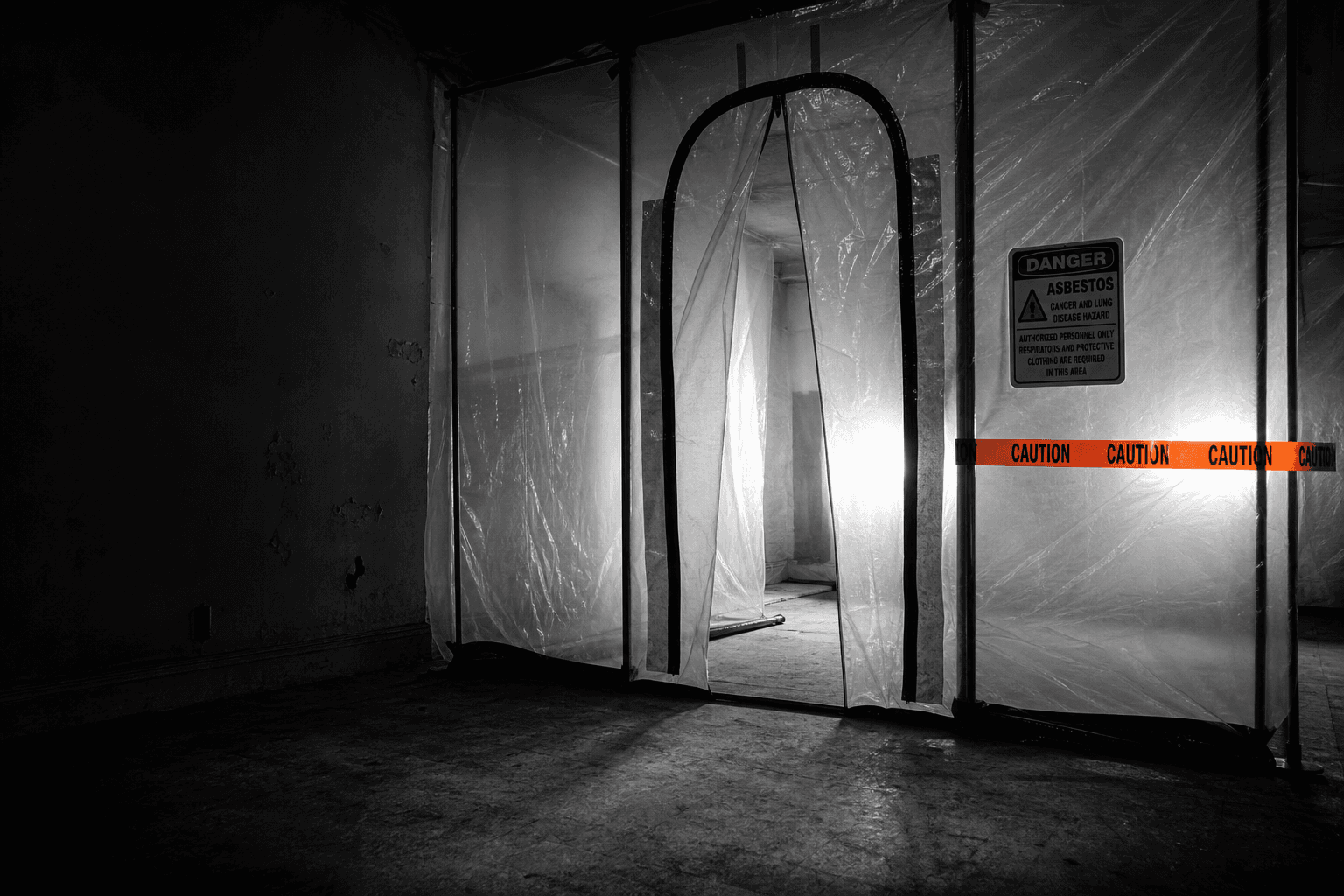
- Type 3 (high risk): Removal of larger quantities, friable materials, or any demolition work. Requires a written asbestos work plan, trained workers, containment, negative air, air monitoring and WorkSafeBC notification.
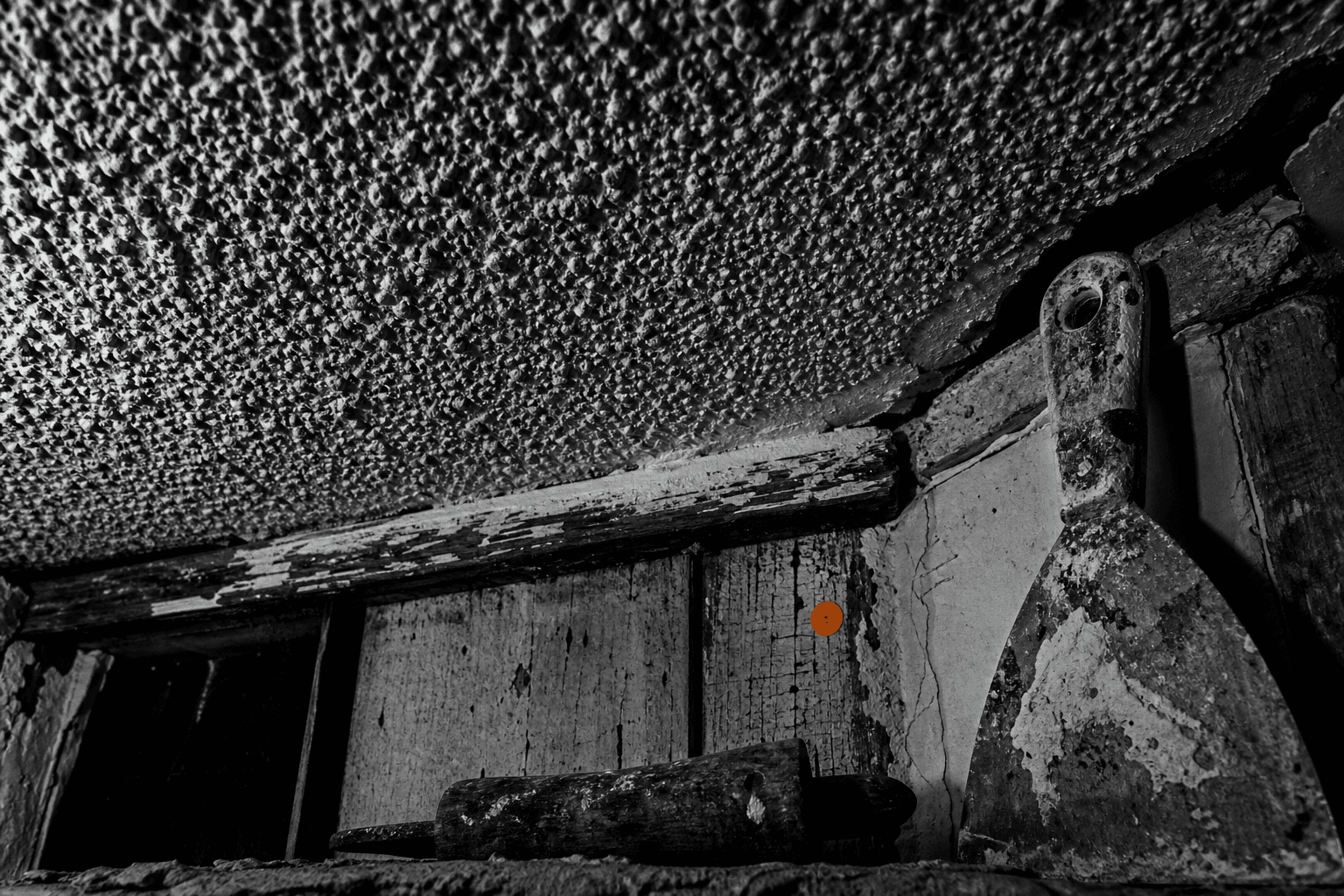
Popcorn ceiling removal, vermiculite insulation removal and most floor tile removal that covers a large area all typically fall under Type 3. Any pre-demolition abatement is Type 3 regardless of quantity.
What a hazardous materials survey actually includes
A proper survey identifies every material in the scope of work that could contain asbestos. The assessor takes samples of suspect materials — ceilings, flooring, drywall compound, pipe wrap, roofing materials, etc. — and sends them to an accredited lab for analysis. The written report identifies each material, its condition and its asbestos content, and recommends a course of action for each.
For demolition permits in Surrey, the City may require this report before issuing the permit. Having it ready saves time and shows the permit office you've done it right.
Who is responsible — homeowner or contractor?
Both, in different ways. The owner of the building has an obligation to disclose known hazardous materials to any contractor coming on site. The contractor (as the employer) has an obligation to ensure workers aren't exposed. In practice, the contractor typically arranges the survey as part of pre-construction planning — but if you're a homeowner hiring trades, it's in your interest to have the assessment done before anyone shows up, because stopping a job mid-demo for asbestos abatement is far more expensive.
What happens if you skip the assessment
WorkSafeBC can issue stop-work orders and significant fines for violations of the OHS Regulation. Beyond fines, if workers are exposed to asbestos without proper controls, the liability exposure for the employer or property owner is serious. And practically speaking, a contractor who discovers asbestos mid-demo and wasn't told about it has every right to stop work until proper abatement is complete — which adds cost and delay that a pre-job survey would have avoided entirely.
We handle hazardous materials surveys and asbestos abatement for projects across Surrey and the Lower Mainland. If you're planning a renovation, demo or are applying for a demolition permit, give us a call and we'll make sure the assessment side is done properly so your project isn't delayed.