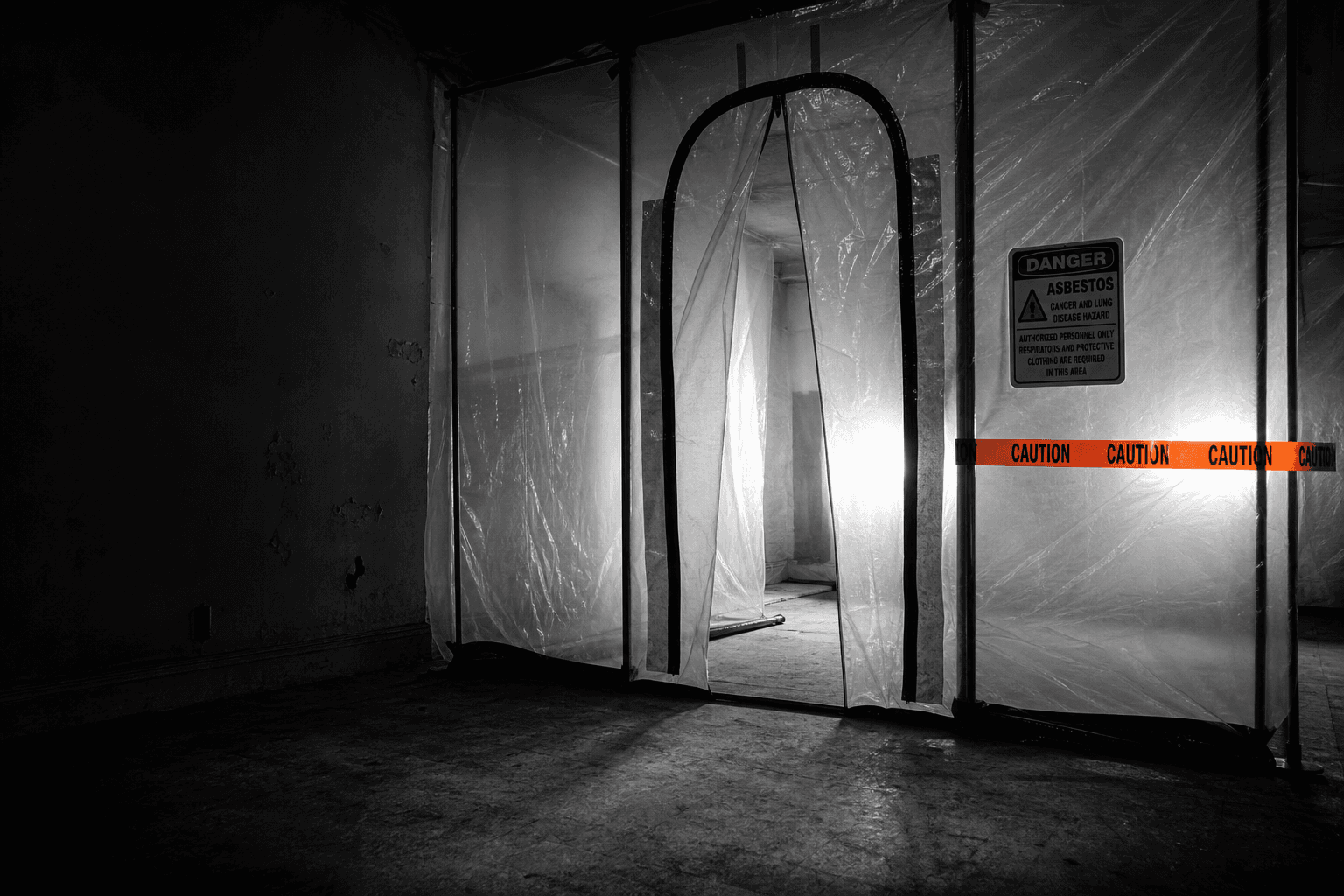
Surrey grew fast through the 1960s, 70s and 80s. Newton, Fleetwood, Whalley, Guildford — a huge chunk of the city was built during the exact window when asbestos was a standard, cheap, legal ingredient in nearly every building product. If your home predates 1990, asbestos is almost certainly in there somewhere. That's not a reason to panic. Asbestos left alone is generally not dangerous. The risk comes the moment you disturb it.
Before any demo, renovation or even a deep clean that involves cutting into walls or ceilings, you need to know what you're dealing with. Here's where we find it most often in local homes.
Sprayed and textured ceilings
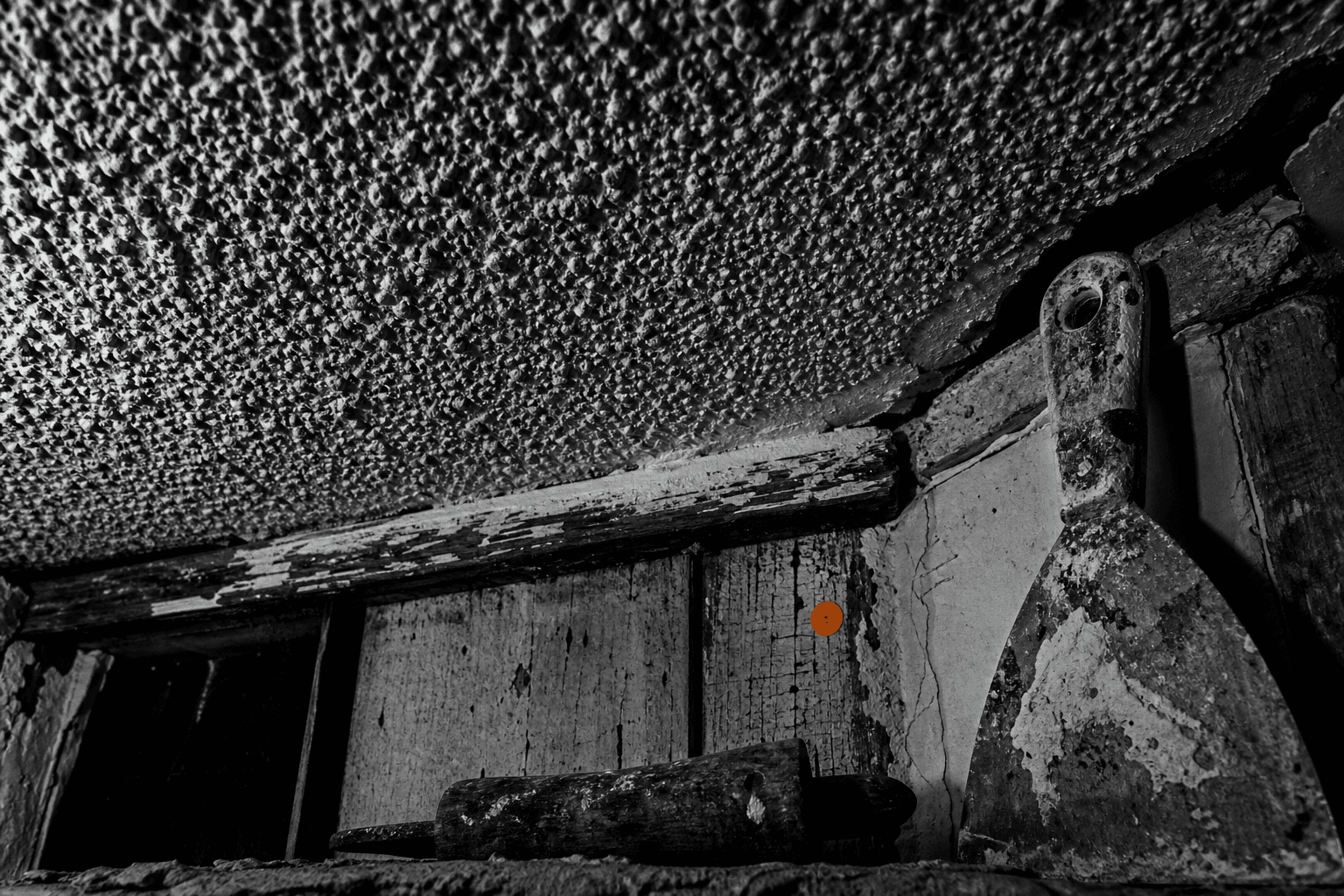
The bumpy 'popcorn' or 'cottage cheese' texture was sprayed on by the thousands of homes across Surrey in the 70s and 80s. A large portion of it contains chrysotile asbestos. You cannot tell by looking at it. Scraping it dry — which almost every DIY video online shows people doing — sends fibres directly into the air you breathe. Never disturb it without testing first.
Vinyl floor tiles and black mastic glue
Nine-inch and twelve-inch vinyl floor tiles from the 1960s through to the mid-80s were often made with asbestos as a binder. More critically, the black adhesive (mastic glue) used to stick down both tiles and sheet lino almost always contained it. The glue is often more dangerous than the tile itself because it's brittle and crumbles when scraped. We find this constantly in Surrey basements and kitchens.
Attic vermiculite insulation
If your attic has loose, grey-brown, pebble-like insulation, it's vermiculite. Most of the vermiculite sold in Canada before 1990 came from a mine in Libby, Montana, that was contaminated with tremolite asbestos — one of the more hazardous fibre types. Health Canada recommends treating all pre-1990 vermiculite as asbestos-containing. Don't go up there, don't store things in the attic, and don't have anyone work up there without testing it first.
Drywall joint compound and texture paint
Pre-1980 joint compound (the mud used to tape drywall seams) frequently contained asbestos to improve workability. So did many spray-on and trowel-applied texture products. Sanding drywall in an older home — even gently — can release fibres if the compound is positive. This surprises a lot of homeowners who assume asbestos is only in 'industrial' materials.
Pipe insulation and duct wrap
Older homes with boilers or forced-air furnaces often have asbestos-wrapped pipes in the basement or utility room. The wrap looks like a grey, cardboard-like sleeve or fibrous plaster. If it's in good condition and undisturbed, leave it alone. If it's crumbling, flaking or has been damaged, treat it as a hazard and call us.
Other materials to watch for
- Exterior asbestos-cement (Transite) siding and roofing shingles
- Interior ceiling tiles and some suspended T-bar tile products
- Old furnace and boiler insulation blankets and door gaskets
- Exterior stucco applied before 1985
- Window and door caulking and putty glazing
- Some older concrete board and fire-rated panels
The rule before any renovation
WorkSafeBC's OHS Regulation requires a hazardous materials assessment before any work that will disturb materials in a building constructed before 1990. But beyond the legal requirement, it's just common sense. A test takes a few hours, the lab result comes back within a few business days, and you'll know exactly which materials are safe and which need to come out before anyone starts swinging tools.
If your Surrey home is in that pre-1990 window and you're planning any kind of work, give us a call. We'll take samples safely, walk you through the results, and handle any abatement so your renovation can move forward cleanly.